In this guide
Measure plaster area and estimate mortar volume using specified thickness and verified yield.
Measure each surface
Prepare a room-by-room schedule of wall lengths and heights. Include both faces of internal partitions only where both are to be plastered. Measure external walls separately. Deduct openings according to the agreed measurement rules and include reveals where applicable. Ceilings and special finishes should have separate quantities.
Calculate wet mortar volume
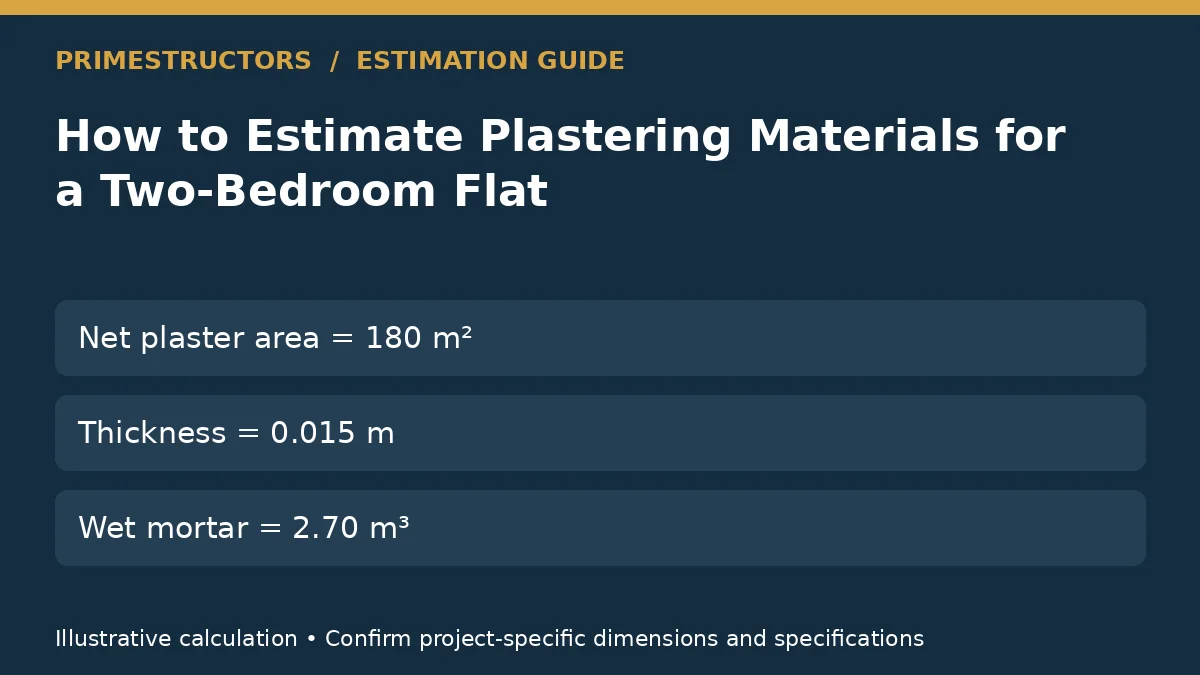
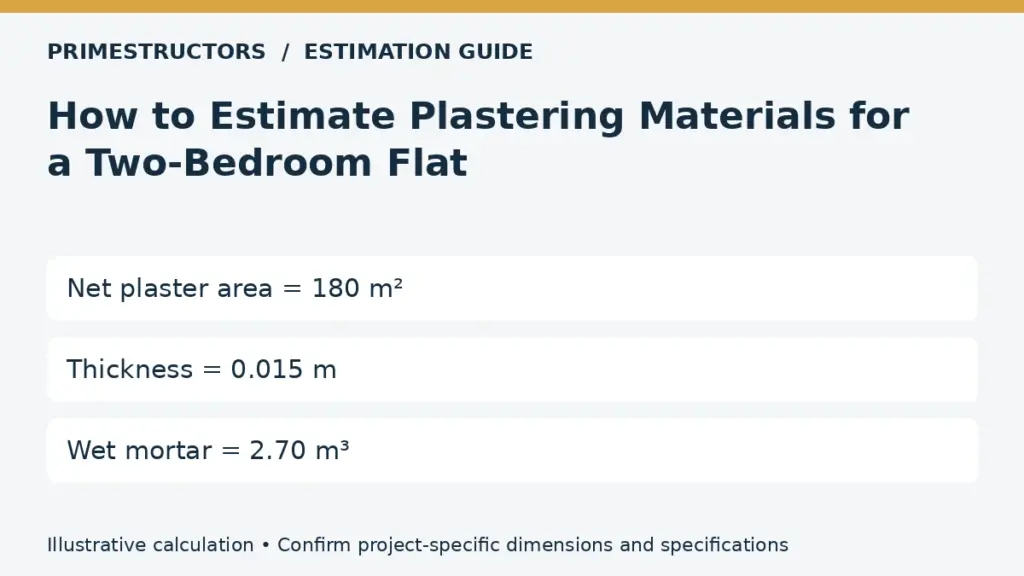
Multiply net surface area by specified finished thickness. For 180 m² at 15 mm the geometric volume is 2.70 m³. A 10% illustrative allowance gives 2.97 m³. Thickness is a major cost driver: at 20 mm the same area requires 3.60 m³ before allowance.
Convert volume to materials
Use a measured trial batch of the specified mortar rather than assuming a universal dry-volume factor. If a trial using one 50 kg cement bag and 0.15 m³ measured sand produces 0.12 m³ usable mortar, 2.97 ÷ 0.12 = 24.75 batches. Round to 25 batches: 25 bags and 3.75 m³ measured sand. These are hypothetical trial results, not a prescribed mix.
Control procurement and workmanship
Confirm sand moisture and bulking, substrate condition and specified finish with the site team. Check thickness at representative locations. Separate labour, access equipment, transport and preparation costs from material rates. Do not change mortar proportions to compensate for a shortage; use the approved specification.
Measurement and procurement checklist
- Record dimensions, units and drawing revision.
- Keep net quantities separate from allowances and round only the final order.
- Confirm supplier coverage or trial yield before ordering.
- Record the date and basis of any supplier quotation.
For unit conversions, consult the NIST SI units reference. For project-specific requirements use the approved drawings, specifications and applicable local rules.