In this guide
Calculate block quantities using actual block dimensions, mortar joints and net wall area.
Measure the block and joint
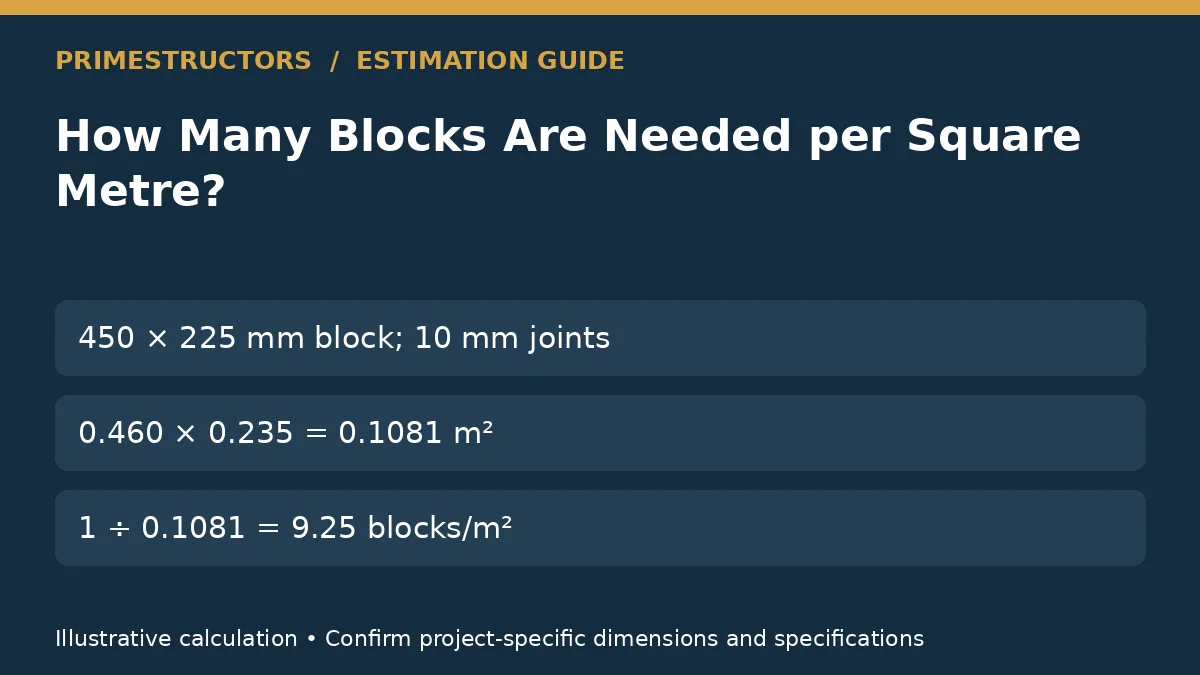
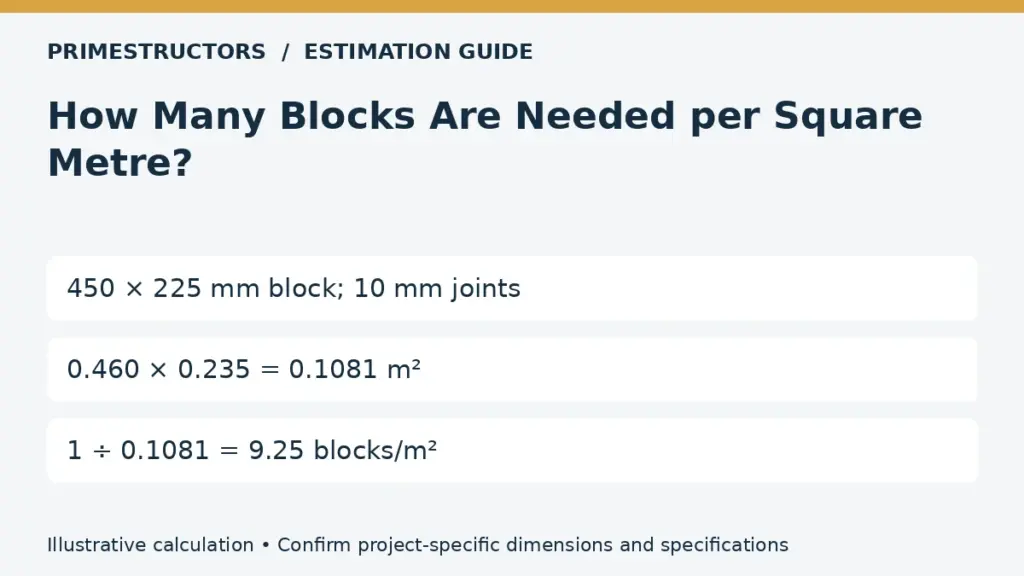
Measure the actual face length and height, not the wall thickness. A nominal 450 mm block may have different actual dimensions depending on the supplier. Confirm whether the stated dimensions already include joints; do not add joints twice. For this example the actual face is 450 by 225 mm and both joints are 10 mm.
Calculate the modular area
Convert millimetres to metres before multiplying. The module is 0.460 m long and 0.235 m high. Its area is 0.1081 m². Divide one square metre by this area to obtain 9.25 blocks per square metre. This is an average over a large wall, not a promise that nine whole blocks fit a one-metre square.
Worked wall example
A 12 m long wall with height 3 m has gross area 36 m². Deduct a 0.9 × 2.1 m door and two 1.2 × 1.2 m windows: net area 31.23 m². Divide by 0.1081 to obtain 288.90 blocks. With an illustrative 5% allowance, order 304 blocks after rounding up. Measure separate wall types independently.
Check the order on site
Count full and cut units on a sample course. Corners, returns, bond pattern and openings affect the cutting requirement. Agree the treatment of columns and lintels with the estimator so their areas are not counted as blockwork. Confirm delivery counts and reject damaged units according to the project specification.
Measurement and procurement checklist
- Record dimensions, units and drawing revision.
- Keep net quantities separate from allowances and round only the final order.
- Confirm supplier coverage or trial yield before ordering.
- Record the date and basis of any supplier quotation.
For unit conversions, consult the NIST SI units reference. For project-specific requirements use the approved drawings, specifications and applicable local rules.