In this guide
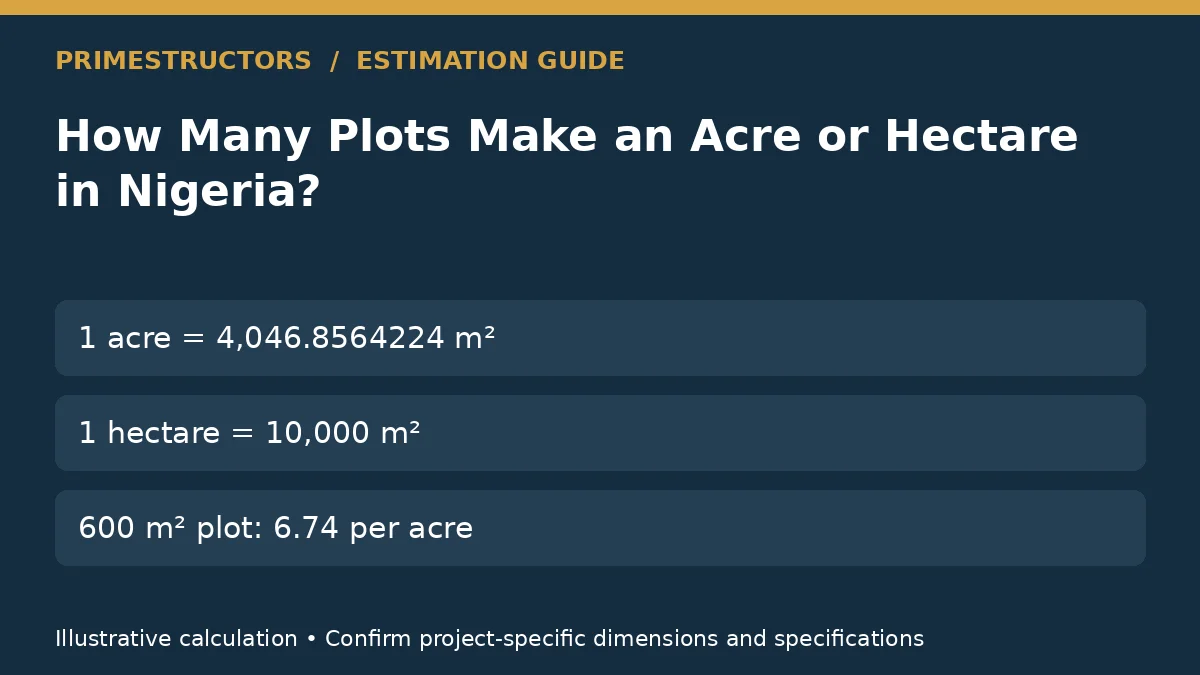
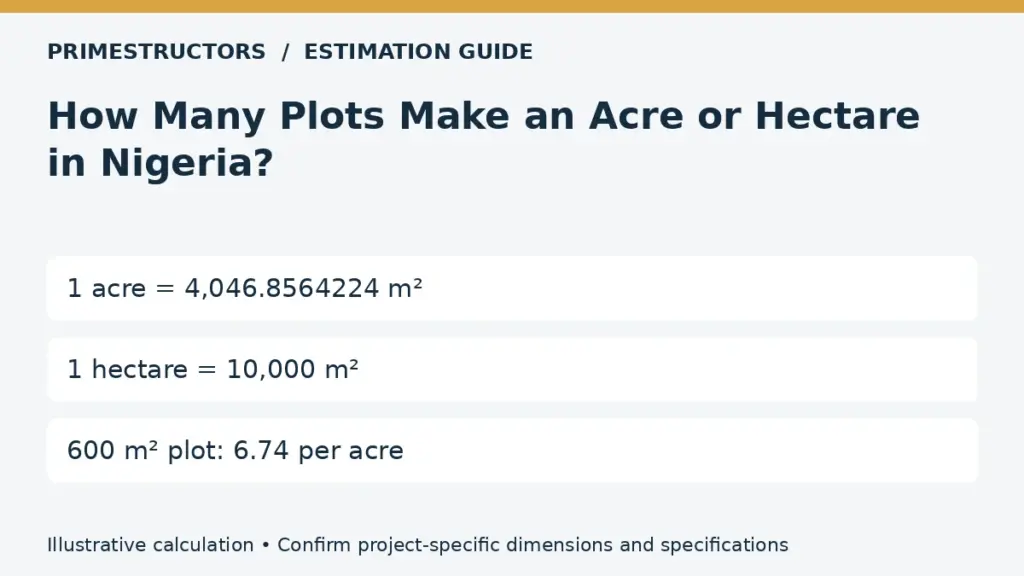
Convert acres and hectares into plot equivalents using surveyed plot areas.
Understand the units
An acre is a fixed area; a plot is not. Nigerian property advertisements may use 450, 500, 600 or other square-metre sizes. Use the surveyed area rather than assuming every plot is 50 by 100 feet. One international foot is exactly 0.3048 metres.
Calculate plot equivalents
Divide total land area by the area of one proposed plot. A 50 by 100 foot rectangle measures 15.24 by 30.48 metres, or 464.5152 m². An acre therefore contains about 8.71 such plot equivalents. A hectare contains about 21.53. These are arithmetic equivalents, not an approved subdivision.
Worked subdivision example
Suppose a surveyed hectare has 2,000 m² allocated to access and other non-saleable space. The remaining 8,000 m² divided by 600 m² gives 13.33 plot equivalents. At most 13 complete plots fit by area alone, with 200 m² remaining. Actual geometry, access and planning requirements can reduce that number.
Verify before buying
Request a survey plan and verify the boundaries and title through the appropriate land authorities and qualified professionals. A plot advertised by frontage and depth may be irregular; do not multiply two sides unless the geometry supports that method. Do not treat a conversion calculation as evidence of ownership or planning approval.
Measurement and procurement checklist
- Record dimensions, units and drawing revision.
- Keep net quantities separate from allowances and round only the final order.
- Confirm supplier coverage or trial yield before ordering.
- Record the date and basis of any supplier quotation.
For unit conversions, consult the NIST SI units reference. For project-specific requirements use the approved drawings, specifications and applicable local rules.